
For rental property owners and investors in Montgomery County, Maryland, cap rate is one of the clearest ways to evaluate whether a property is truly performing. While appreciation and long-term stability matter, cap rate offers a grounded snapshot of how efficiently a rental converts value into income.
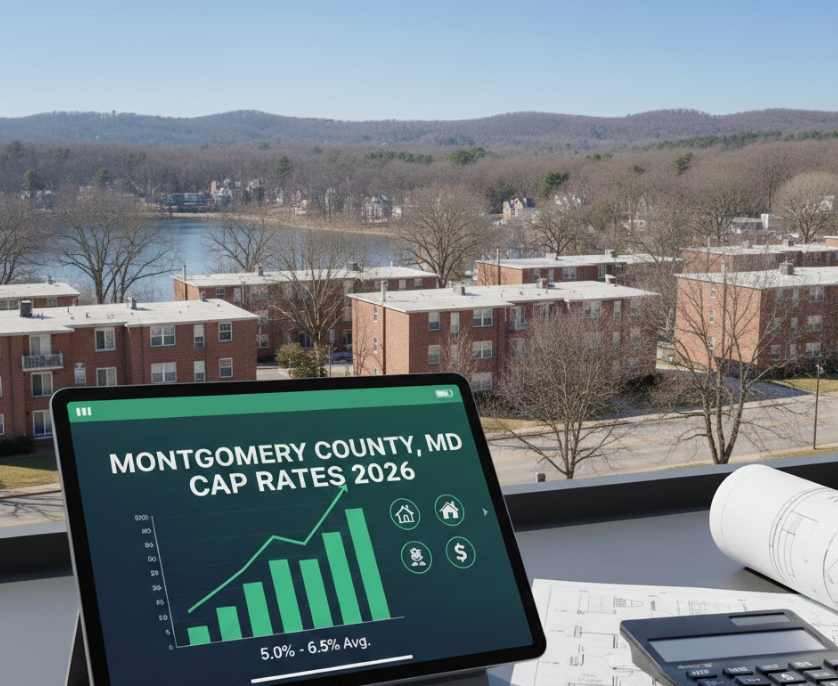
Montgomery County presents a unique challenge. Strong demand, proximity to Washington, DC, and increasingly complex regulations all influence returns. Cap rates vary meaningfully by neighborhood, and understanding those differences helps landlords make better acquisition, pricing, and management decisions.
This guide compares recent cap rate trends across key Montgomery County rental markets, with specific insight into Silver Spring and surrounding areas.
What Cap Rate Means for Montgomery County Landlords
Cap rate, or capitalization rate, measures a property’s annual net operating income (NOI) relative to its market value.
Cap Rate Formula
Cap Rate = Net Operating Income/Property Value
Net operating income includes rental income minus operating expenses such as maintenance, property management, insurance, licensing, and routine repairs. It does not include financing.
Cap rate is best used as a comparison tool, not a guarantee of performance. In Montgomery County, it helps landlords weigh cash flow against stability, compliance costs, and long-term appreciation.
Why Cap Rates Vary Across Montgomery County
Several local factors shape cap rates across neighborhoods:
- Property values relative to rent ceilings
- Vacancy and turnover rates
- Compliance and licensing requirements
- Tenant demographics and income stability
- Maintenance intensity and property age
Areas with higher purchase prices and stable demand tend to produce lower but more predictable cap rates. Neighborhoods with lower entry prices may offer higher cap rates, but often with increased operational risk.
Cap Rate Comparison by Neighborhood
Silver Spring
Typical cap rate range: ~5.5%–6.75%
Silver Spring is one of Montgomery County’s strongest rental markets due to its transit access, walkability, and proximity to DC. Property values are relatively high, which compresses cap rates, but demand remains consistent.
Key drivers:
- Metro and MARC access
- Strong professional tenant base
- Higher compliance visibility
- Faster leasing when properties are well-positioned
Silver Spring favors landlords focused on steady income and reduced vacancy risk rather than maximum yield.
Rockville
Typical cap rate range: ~5.25%–6.25%
Rockville’s cap rates are similar to Silver Spring, though slightly tighter in premium submarkets. Higher acquisition costs are offset by strong employment centers and stable renter demand.
Key drivers:
- Corporate and biotech employment
- Newer multifamily inventory
- Higher operating expectations
Rockville often appeals to investors prioritizing predictability and long-term appreciation.
Gaithersburg and Germantown
Typical cap rate range: ~6.5%–7.75%
Gaithersburg and Germantown offer more favorable price-to-rent ratios, resulting in higher cap rate potential. However, vacancy risk and maintenance costs can be higher depending on property condition.
Key drivers:
- Lower purchase prices
- Larger inventory of older properties
- More price-sensitive renters
These neighborhoods can work well for investors focused on cash flow, provided operational discipline is strong.
Bethesda and Chevy Chase
Typical cap rate range: ~4.5%–5.75%
Premium pricing and affluent renter demand drive lower cap rates. These markets are rarely cash-flow focused but offer strong tenant stability and long-term value retention.
Key drivers:
- High property values
- Professional and executive tenants
- Lower turnover but higher entry cost
Bethesda and Chevy Chase are typically appreciation-first investment plays.
Wheaton and Aspen Hill
Typical cap rate range: ~6.75%–8.0%
These neighborhoods often produce higher cap rates due to lower acquisition costs, but they require careful tenant screening and proactive maintenance.
Key drivers:
- Higher density
- Older housing stock
- Greater variability in tenant turnover
Well-managed properties here can outperform on paper but require hands-on oversight.
How Regulations Affect Cap Rates in Montgomery County
Montgomery County’s rental environment includes:
- Rental licensing and registration requirements
- Rent stabilization rules
- Habitability and inspection standards
These factors increase operating costs and reduce flexibility, which can compress cap rates if not managed carefully. Landlords who fail to account for compliance often overestimate returns.
Professional property management can directly influence NOI by:
- Reducing vacancy time
- Improving tenant retention
- Preventing costly violations and fines
- Streamlining maintenance and leasing workflows
Example Cap Rate Scenario
A Silver Spring rental producing $3,000 per month in rent:
Annual gross rent: $36,000
Estimated operating expenses: $9,000
Net operating income: $27,000
If the property value is $450,000:
Cap Rate = $27,000 ÷ $450,000 = 6.0%
Small changes in vacancy or expenses can significantly shift this outcome, reinforcing why operational quality matters as much as location.
What This Means for Investors and Landlords
Cap rate alone does not determine success, but in Montgomery County, it provides critical insight into:
- Risk versus stability
- Cash flow versus appreciation
- Neighborhood-level strategy alignment
Silver Spring and Rockville favor stability and lower volatility. Gaithersburg, Germantown, Wheaton, and Aspen Hill offer higher yield potential with increased operational complexity.
Choosing the right market depends on how well the property is managed, not just where it is located.
Frequently Asked Questions
What is a good cap rate in Montgomery County, MD?
A cap rate between 5.5% and 7% is typical for stabilized residential rentals, depending on neighborhood and property condition.
Why are cap rates lower near DC?
Higher property values and strong demand compress returns, but reduce vacancy risk and income volatility.
Can property management improve cap rate?
Yes. Reduced vacancy, better tenant retention, and controlled operating costs directly increase NOI, which raises effective cap rate.
Is a higher cap rate always better?
Not necessarily. Higher cap rates often come with higher risk, maintenance costs, or tenant turnover.
Why Management Quality Determines Investment Performance
Owning rental property in Montgomery County is not passive.
Between compliance, tenant expectations, and market shifts, the details matter. Mainstay Property Management focuses on those details so owners can focus on the bigger picture. Thoughtful property management is not an expense. It is what keeps your investment working.