
Responsive Maintenance Is No Longer Optional in Montgomery County
In Montgomery County, MD, failing to meet property maintenance requirements is no longer just an operational concern. It’s a legal liability. Landlords of small multifamily properties, typically 5–50 units, must comply with the Department of Housing and Community Affairs (DHCA) habitability standards to avoid inspections, fines, and the risk of “troubled property” designation.
What may have once been considered a minor delay in repairs can now trigger inspections, violations, and formal enforcement actions. This shift is changing how landlords approach property upkeep.
Reactive repairs are no longer enough.
Waiting for a tenant complaint or a system failure can quickly escalate into a compliance issue that affects both operations and revenue.
Protecting your return on investment often requires working with professional property managers who implement maintenance strategies that prioritize compliance, safety, and long-term asset preservation.
Key Takeaways
- DHCA enforcement is strict: Non-compliance can lead to fines, inspections, and regulatory oversight.
- Troubled property status is costly: A “troubled” designation can freeze rent increases and impact financing.
- Predictive maintenance reduces risk: Early identification of plumbing, electrical, and HVAC issues prevents expensive repairs.
- Professional management protects ROI: Structured maintenance plans help landlords stay compliant and preserve property value.
NOTE: The information provided in this blog is for educational purposes and does not constitute legal or financial advice. Because housing codes and enforcement protocols are subject to change, landlords should verify all specific requirements directly with the Montgomery County DHCA. Always consult with a licensed professional or legal expert before making significant changes to your property management or maintenance strategies.
Understanding the “Troubled Property” Risk
One of the most important regulatory concepts for landlords in Montgomery County is the DHCA designation of “at-risk” and “troubled” properties.
These classifications come with real financial consequences.
When a property accumulates a certain number of violations, particularly those related to health and safety, it may be placed on a corrective action plan. From there, it can be designated as “troubled,” which triggers increased oversight and restrictions.
Learn more: How Landlords Can Avoid the “Troubled Property” Designation in Montgomery County, MD
What Are Montgomery County Property Maintenance Requirements?
Montgomery County requires landlords to maintain safe, habitable rental units year-round. Key obligations include:
- Heating: Maintain at least 68°F between October 1 and May 31. Repairs must be completed within 24 hours.
- Window Guards: Annual notification to tenants; required if children 10 or younger occupy the unit.
- Lead-Based Paint: For buildings built before 1978, painted surfaces must be intact and maintained to prevent hazards.
- Life Safety Systems: Smoke alarms, fire extinguishers, and other critical systems must be operational and tested regularly.
Failure to meet these requirements can trigger citations, fines, rent escrow, or a “troubled property” designation, affecting both your operations and income.
High-Risk Systems in Older Garden-Style Buildings
Many multifamily properties in Montgomery County are older, garden-style buildings. These properties often have aging systems that require closer attention. Understanding which systems carry the highest compliance risk can help landlords prioritize multifamily maintenance efforts.
Heating Systems and the 24-Hour Rule
Between October and May, landlords are required to provide heat to tenants as part of their basic housing obligations under Montgomery County Law. If heating fails, it must be restored within 24 hours.
Failure to meet this requirement can result in immediate citations and potential fines. In colder months, even a short delay can trigger tenant complaints and regulatory action.
Window Guard Compliance
Montgomery County requires annual notification regarding window guards. If a unit houses a child aged 10 or younger, window guards must be installed.
Failure to comply can result in fines and increased liability, especially if an incident occurs.
Lead-Based Paint Requirements
For properties built before 1978, lead-based paint regulations remain a major focus.
Landlords must ensure that painted surfaces are intact and properly maintained. Chipping or deteriorating paint can lead to violations, particularly during inspections.
These issues are often easy to overlook but can carry significant consequences if not addressed.
Life Safety Systems: Compliance and Risk in Montgomery County
Maintaining life safety systems is a critical part of Montgomery County’s property maintenance requirements. These systems protect tenants, reduce liability, and prevent costly violations under DHCA regulations. Landlords must ensure all units meet operational standards for safety equipment, including:
1. Smoke and Carbon Monoxide Alarms
- Smoke alarms must be installed in every unit, outside sleeping areas, and on each floor.
- Carbon monoxide detectors are required in units with fuel-burning appliances or attached garages.
- Landlords must test alarms regularly and replace batteries as needed.
Why it matters: Failing to maintain alarms can lead to fines (~$500 per unit) and jeopardize habitability compliance.
2. Fire Extinguishers and Emergency Systems
- Common areas must be equipped with accessible fire extinguishers.
- Hallways, stairwells, and exit routes must remain unobstructed and clearly marked.
Why it matters: Inadequate fire safety measures can trigger DHCA citations and escalate “troubled property” risks.
3. Egress and Exit Requirements
- Windows and doors must provide safe, accessible emergency exits.
- Blocked or malfunctioning exits are considered serious violations and must be corrected immediately.
Proactive Life Safety Maintenance Tips
- Schedule quarterly inspections of alarms, extinguishers, and emergency lighting.
- Keep records of inspections, repairs, and tenant notifications to demonstrate compliance.
- Use predictive maintenance tools, such as thermal imaging for electrical systems, to prevent hazards before they become emergencies.
By maintaining life safety systems, landlords not only comply with Montgomery County DHCA standards but also protect tenants, reduce liability, and safeguard long-term property value.
What Is Predictive Maintenance for Multifamily Properties?
The question many landlords face is simple. Why wait for a problem to happen?
Predictive maintenance for residential commercial real estate is becoming an essential strategy for property owners who want to reduce risk and maintain compliance.
Instead of reacting to failures, predictive maintenance focuses on identifying issues before they become visible or disruptive.
Acoustic Leak Detection
In older buildings with aging plumbing systems, small leaks can develop without immediate signs.
Acoustic leak detection technology allows property managers to identify these issues early, before they lead to water damage, mold, or tenant complaints. Addressing these problems early can prevent larger repairs and avoid potential violations.
Thermal Electrical Scans
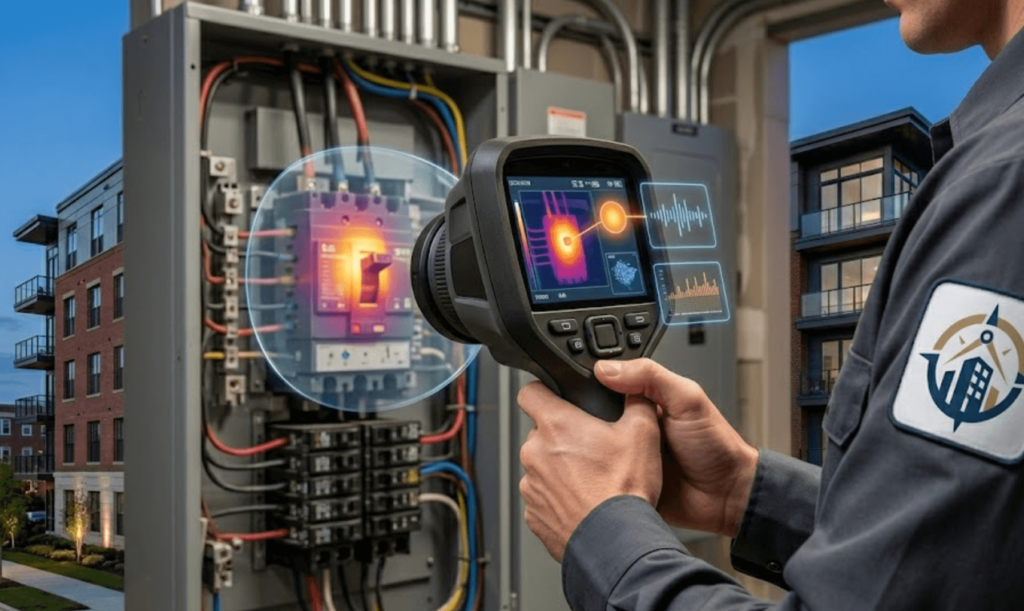
Electrical systems in older properties are often not designed to handle modern usage. Thermal imaging can identify overloaded circuits or failing components before they cause outages. This helps prevent emergency repairs and reduces the risk of safety-related violations.
The Financial Impact of Predictive Maintenance
Predictive maintenance is about compliance and financial strategy.
By identifying issues early, multifamily property owners can reduce emergency repair costs, minimize downtime, and extend the lifespan of major systems. In many cases, this approach can significantly reduce unexpected repair expenses.
More importantly, it helps avoid the types of violations that can lead to increased scrutiny or “Troubled Property” designation.
The Cost of Delayed Multifamily Maintenance
The difference between proactive and reactive maintenance is not just operational. It directly impacts your bottom line.
When small issues are addressed early, costs stay predictable. When ignored, they often escalate into costly repairs, tenant disruption, and potential compliance violations.
Here is how that difference typically plays out:
Proactive Maintenance vs Reactive Maintenance Cost Comparison
| Maintenance Category | Preventative Cost (Average) | Emergency Cost (Estimated) | Potential Regulatory Penalty |
| Sewer Main Line | Few hundred dollars (Routine inspections) | $3,000+ (Disruptive backups) | Rent may be placed in escrow until resolved. |
| HVAC Service | $200 (Seasonal servicing) | $1,500+ (Repairs or replacement) | Citations and fines if heat isn’t restored in 24 hours. |
| Window Guards | $75 per unit (Annual checks) | Higher correction costs + Liability | Fines exceeding $1,000 for non-compliance. |
| Smoke Alarms | Minimal (Testing & batteries) | Full unit replacement costs | Fines of approximately $500 per unit. |
The difference is clear. Addressing issues early keeps costs manageable, while delays often lead to higher expenses, added stress, and increased regulatory risk.
Moving from Reactive to Strategic Property Management
The shift toward proactive maintenance is part of a larger change in how multifamily properties are managed.
Landlords who continue to rely on reactive repairs are more likely to face:
- Unexpected expenses
- Increased tenant complaints
- Regulatory violations
- Lost opportunities for rent increases
For multifamily landlords moving toward a compliance-first model, professional property management is no longer a luxury. It is a risk mitigation strategy.
A structured management approach does more than just address maintenance. It also shields your portfolio from the financial volatility of emergency repairs and the increasing oversight of the Office of Rent Stabilization.
The Mainstay Property Management Multifamily Advantage in MoCo
Mainstay Property Management helps landlords take a proactive approach to multifamily maintenance and compliance.
With structured maintenance plans, predictive monitoring of high-risk systems, and coordinating timely repairs, Mainstay Property Management ensures properties remain in compliance with local regulations.
This approach not only reduces the risk of violations but also supports long-term property performance. Instead of reacting to problems, property owners can operate with confidence, knowing that their assets are being managed strategically.
Is your property protected against avoidable maintenance risks?
A proactive approach to small multifamily maintenance can help you reduce costs, avoid compliance issues, and protect your long-term return on investment.
If your property is at risk of DHCA violations or struggling to meet Montgomery County maintenance requirements, Mainstay Property Management can help you implement a proactive compliance strategy.
Contact Mainstay Property Management to learn how we can protect your property’s performance in 2026 and beyond.
FAQ: Multifamily Maintenance & Compliance in Montgomery County (2026)
Q: What exactly is a “Troubled Property” designation, and how does it affect my ROI?
A: The Department of Housing and Community Affairs (DHCA) classifies properties as “troubled” if they accumulate severe health and safety violations or fail to correct issues after an initial “at-risk” warning. This designation triggers mandatory annual inspections, higher licensing fees, and stricter oversight. Financially, it can lead to rent escrow (where tenants pay the County instead of you) and can severely damage the property’s market value and your ability to secure financing.
Q: Does the 24-hour heat restoration rule apply even if parts are on backorder?
A: Yes. Under Montgomery County law, landlords must maintain a minimum temperature of 68°F between October 1 and May 31. If a system fails, it must be restored within 24 hours. “Waiting for parts” is generally not accepted as a valid defense by inspectors. This is why predictive maintenance, such as seasonal HVAC servicing and thermal electrical scans, is critical to identify failing components before the peak winter months.
Q: How do the new 2026 rent stabilization rules intersect with maintenance?
A: Maintenance and rent are now legally linked. If a property has outstanding “life safety” violations or is designated as a troubled property, the Office of Rent Stabilization may deny your right to implement the annual allowable rent increase (currently capped at 5.2% for regulated units). Essentially, poor maintenance can “freeze” your revenue while your operating costs continue to rise.
Q: Are window guards required in every unit of a multifamily building?
A: Not necessarily, but the notification is mandatory for all. Landlords must provide an annual notice to all tenants asking if children aged 10 or younger live in the unit or visit regularly. If the answer is “yes,” you are legally required to install DHCA-approved window guards. Failing to have a signed notice on file for every unit is a common compliance trap that leads to heavy fines during routine inspections.
Q: Is “Acoustic Leak Detection” really necessary for older garden-style buildings?
A: It is a high-value preventive tool. In older MoCo buildings, pinhole leaks in galvanized or copper pipes often occur behind walls. By the time a tenant sees a water spot, mold has often already formed, leading to a much more expensive remediation and potential “habitability” complaints to the County. Proactive detection identifies these vibrations before the pipe bursts, saving thousands in emergency plumbing and mold litigation costs.