
The New Standard for Montgomery County Multifamily Owners
As of April 2026, rent stabilization in Montgomery County is no longer a proposal or temporary policy. It is now a permanent part of the local rental landscape, and it is changing how landlords operate.
For owners of small multifamily properties, typically those with 5 to 50 units, the shift brings more than just limits on rent increases. It introduces new reporting requirements, tighter timelines, and a level of oversight that makes informal or “do-it-yourself” property management much harder to sustain.
What used to be manageable with spreadsheets and reminders now requires consistent tracking, accurate data, and a clear understanding of deadlines. Even small errors can lead to penalties, delayed rent increases, or licensing issues.
Small multifamily success in Montgomery County, MD, in 2026 comes down to one thing. Staying ahead of the rules instead of reacting to them.
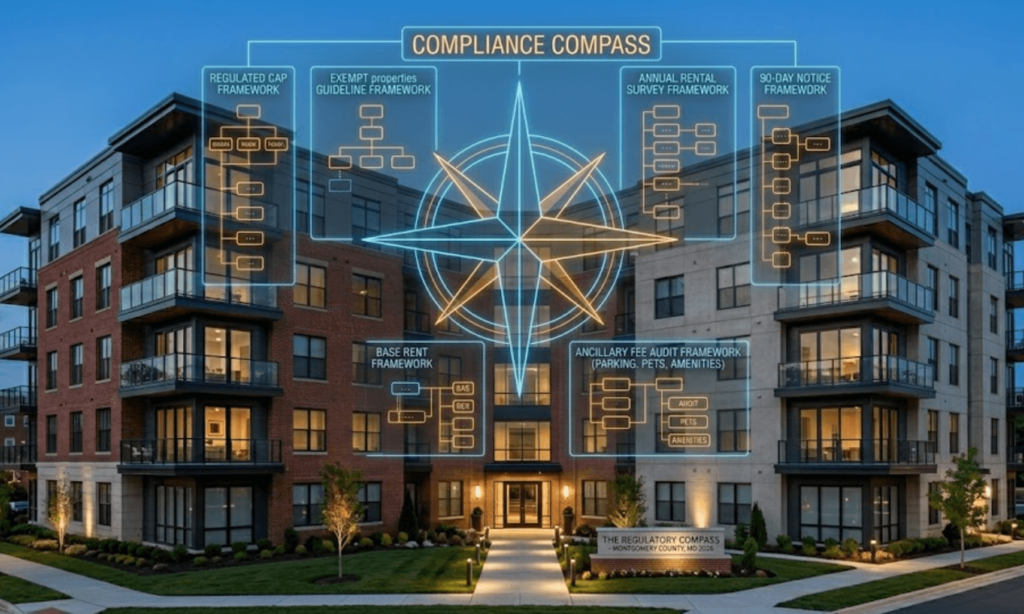
Understanding Montgomery County RSO
The Rent Stabilization Ordinance establishes clear guidelines to ensure fair housing practices and market stability for both landlords and tenants. These evolving rules define the legal limits on rent increases and the specific notification procedures required for any lease adjustment.
2025–2026 Rent Increase Caps for Regulated Units
For units subject to local rent regulation, specific caps are in place to ensure affordability. These maximum allowable increases are updated annually:
| Effective Date | Maximum Allowable Increase |
| July 1, 2025 | 5.7% |
| July 1, 2026 | 5.2% |
For many landlords, this directly affects revenue planning. Rent increases must now be timed carefully and calculated within the allowable range. There is little room for adjustment afterward.
Voluntary Rent Guideline for Exempt Properties
For exempt properties, the Voluntary Rent Guideline is set at 3.3 percent, effective March 1, 2026. While this guideline is not mandatory, it is monitored by the County. Large or inconsistent increases may still raise concerns, so staying close to the guideline is often the safest approach.
The 90-Day Notice Requirement
Montgomery County requires a minimum of 90 days’ written notice before any rent increase.
This is one of the most common areas where landlords run into trouble. Missing the notice period, even by a single day, can invalidate the increase. In some cases, landlords may need to issue credits back to tenants, which creates unnecessary financial loss and administrative work.
For owners managing multiple leases, tracking these timelines manually can quickly become overwhelming.
NOTE: The information provided in this blog, including the summary of the Montgomery County Rent Stabilization Ordinance (RSO) and associated 2026 rent caps, is for informational and educational purposes only. Landlords and tenants are strongly encouraged to consult with the Montgomery County Department of Housing and Community Affairs (DHCA) or a qualified legal professional to confirm specific compliance requirements for their individual properties.
The April Deadline: Annual Rental Survey for Rental Properties in Montgomery County, MD
April is one of the most important months for landlords in Montgomery County.
Each year, from April 1 through April 30, all licensed rental properties must submit the Annual Rental Survey through the County’s Housing Portal, as required by the Montgomery County Department of Housing and Community Affairs.
What Makes the 2026 Rent Survey Different?
This year’s survey carries more weight than in the past. The County is using the data to establish official base rent figures for each unit, which will serve as the foundation for future rent increases.
Landlords are required to provide rental data dating back to July 2024. This includes lease terms, rent amounts, and any relevant adjustments over time.
If the information is incomplete or inaccurate, it may limit your ability to raise rents in the future.
Penalties for Non-Compliance with the Rent Survey
Failing to submit the survey by April 30 can result in:
- Civil penalties of up to $1,000 per violation
- Delays or denial of rental license renewal
- Increased scrutiny from regulatory agencies
This is not just a reporting task. It is a key part of maintaining compliance and protecting your property’s long-term performance.
How to Submit the Montgomery County Rent Survey
Submitting the annual rent survey is a straightforward process:
- Access the DHCA Portal
Go to the Montgomery County Department of Housing and Community Affairs (DHCA) rental housing portal. - Log In or Register
Use your existing account or create one if you’re a first-time filer. - Enter Property Details
Provide required information, including unit counts, rent amounts, and occupancy data. - Review for Accuracy
Double-check all entries to avoid delays or compliance issues. - Submit Before the Deadline
Complete your submission on time to remain in good standing.
Tip: Keep a record of your submission confirmation for your files and future reporting.
Common Mistakes to Avoid When Submitting the Rent Survey
Even small errors can lead to delays or compliance issues. Avoid these common mistakes:
- Missing the deadline
Late submissions can result in penalties or compliance flags. - Incomplete unit data
Failing to include all units or leaving fields blank can trigger follow-ups from DHCA. - Incorrect rent amounts
Ensure all rent figures are accurate and reflect current lease terms. - Using outdated information
Always report the most recent and relevant data for your property. - Not keeping confirmation records
Save proof of submission in case you need to verify compliance later.
Pro Tip: Assign one point of contact to handle submissions each year to ensure consistency and accuracy.
Penalties for Non-Compliance with the Montgomery County Rent Survey
Failing to complete the annual rent survey, or submitting incorrect or incomplete information, can carry real consequences:
- Fines or monetary penalties
DHCA may issue fines for late or inaccurate submissions. - Compliance flags
Properties not in compliance can face additional administrative scrutiny or audits. - Impact on property operations
Non-compliance may delay approvals for rent adjustments or other regulatory filings. - Legal exposure
Repeated violations can lead to enforcement actions under Montgomery County housing regulations.
Bottom line: Timely and accurate submission protects your property, your tenants, and your bottom line.
Managing Multifamily Fees and Ancillary Costs
In 2026, the compliance-first strategy goes beyond base rent.
The Office of Rent Stabilization is now reviewing additional charges such as parking, pet fees, and amenity costs. If these fees increase faster than the allowable rent cap, they may be flagged as disguised rent increases.
This creates a new challenge for landlords who rely on these fees to offset expenses.
A compliant strategy must look at the full financial picture, not just the monthly rent. Every charge tied to the lease should align with County expectations.
Without careful planning, it is easy to unintentionally create compliance issues.
2026 Montgomery County Small Multifamily Compliance Snapshot
To stay compliant in 2026, landlords should keep the following key requirements and deadlines in mind:
- Rent Stabilization Cap: A maximum increase of 5.2 percent for regulated units, effective July 1, 2026
- Voluntary Rent Guideline: A recommended increase of 3.3 percent for newer properties, effective March 1, 2026
- Annual Rental Survey: Mandatory submission through the Housing Portal, due by April 30, 2026
- Notice Requirement: A minimum of 90 days’ written notice is required before any rent increase
- Increase Frequency: Rent increases are limited to once every 12 months for all lease types
This snapshot serves as a year-round compliance checklist, helping landlords stay ahead of deadlines rather than reacting to them.
| Effective Date / Deadline | Requirement | Action Needed |
| March 1, 2026 | Voluntary Rent Guideline (3.3%) | Recommended for properties under 23 years old. |
| April 1 – 30, 2026 | Annual Rental Survey | Mandatory submission through the Housing Portal. |
| July 1, 2026 | Rent Stabilization Cap (5.2%) | Mandatory maximum for regulated units. |
| Ongoing | 90-Day Notice Requirement | Minimum 90 days’ written notice required for any increase. |
| Ongoing | Increase Frequency | Limited to once every 12 months for all lease types. |
Moving Away from Reactive Multifamily Management
The current regulatory environment has changed what it means to successfully manage a multifamily property.
In the past, many landlords could take a more reactive approach. Handle issues as they come up, adjust rents based on market conditions, and manage operations informally.
That approach no longer works.
Today’s requirements demand:
- Consistent data tracking
- Accurate historical records
- Careful planning of rent increases
- Strict adherence to timelines
- Ongoing awareness of regulatory changes
For landlords, understanding what support should look like is just as important as understanding the rules. It’s important to know what landlords should expect from their property manager.
Building a Proactive Multifamily Compliance Strategy
To operate successfully in Montgomery County, landlords need a structured and forward-looking approach.
Maintain Accurate Records
Keep detailed records of rent history, lease terms, and fee structures dating back to at least July 2024. This ensures your reporting is accurate and supports future rent adjustments.
Plan Rent Increases Early
Work backward from your intended increase date to meet the 90-day notice requirement. This avoids last-minute mistakes that could invalidate the increase.
Monitor Property Eligibility
Understand whether your property falls under rent stabilization or qualifies for the Voluntary Rent Guideline. This affects how you plan pricing and long-term strategy.
Align All Fees
Review your entire pricing structure, including ancillary fees, to ensure everything complies with current standards.
Stay Ahead of Deadlines
From the April Rental Survey submission (due April 30, 2026) to ongoing notice requirements, tracking key dates is essential.
The Mainstay Property Management Multifamily Advantage
Complying with Montgomery County’s rental regulations requires attention to detail and consistent follow-through.
Mainstay Property Management helps landlords stay organized, compliant, and focused on long-term performance.
With a structured approach to data tracking, reporting, and tenant communication, Mainstay ensures that nothing is missed. From managing Housing Portal submissions to issuing timely notices and monitoring regulatory changes, every step is handled with precision.
Instead of reacting to compliance issues, property owners can operate with confidence and clarity.
Take the Next Step
Is your base rent correctly filed in the new Montgomery County Housing Portal?
Now is the time to make sure everything is aligned.
Contact Mainstay Property Management today to schedule a 2026 multifamily compliance check and take the guesswork out of maximizing your profits.
Frequently Asked Questions: Montgomery County RSO & Annual Rent Survey
Q: Which properties are exempt from the Rent Stabilization Ordinance?
A: In 2026, properties that are under 23 years old are generally exempt from mandatory rent caps, though they are strongly encouraged to follow the 3.3% Voluntary Rent Guideline. Other exemptions may exist for certain owner-occupied small properties (typically 2 units or fewer); however, standard Small Multifamily properties (5-50 units) are almost always regulated unless they meet the age requirement.
Q: Can I increase parking or pet fees by any amount since they aren’t “rent”?
A: No. As of 2026, the Office of Rent Stabilization actively reviews all ancillary costs, including parking, pet fees, and amenity charges. If these fees increase at a rate higher than the 5.2% allowable rent cap, they may be flagged as “disguised rent increases,” potentially invalidating the hike and leading to mandatory tenant credits.
Q: What happens if I miss the April 30 deadline for the Annual Rental Survey?
A: Failing to submit the Annual Rental Survey through the Montgomery County Housing Portal by April 30 is a serious compliance failure. The Department of Housing and Community Affairs (DHCA) may issue civil penalties of up to $1,000 per violation. Furthermore, missing the deadline can lead to delays or denial of your rental license renewal and significantly increase regulatory scrutiny of your operations.